1. Measure the building by area, not as one number
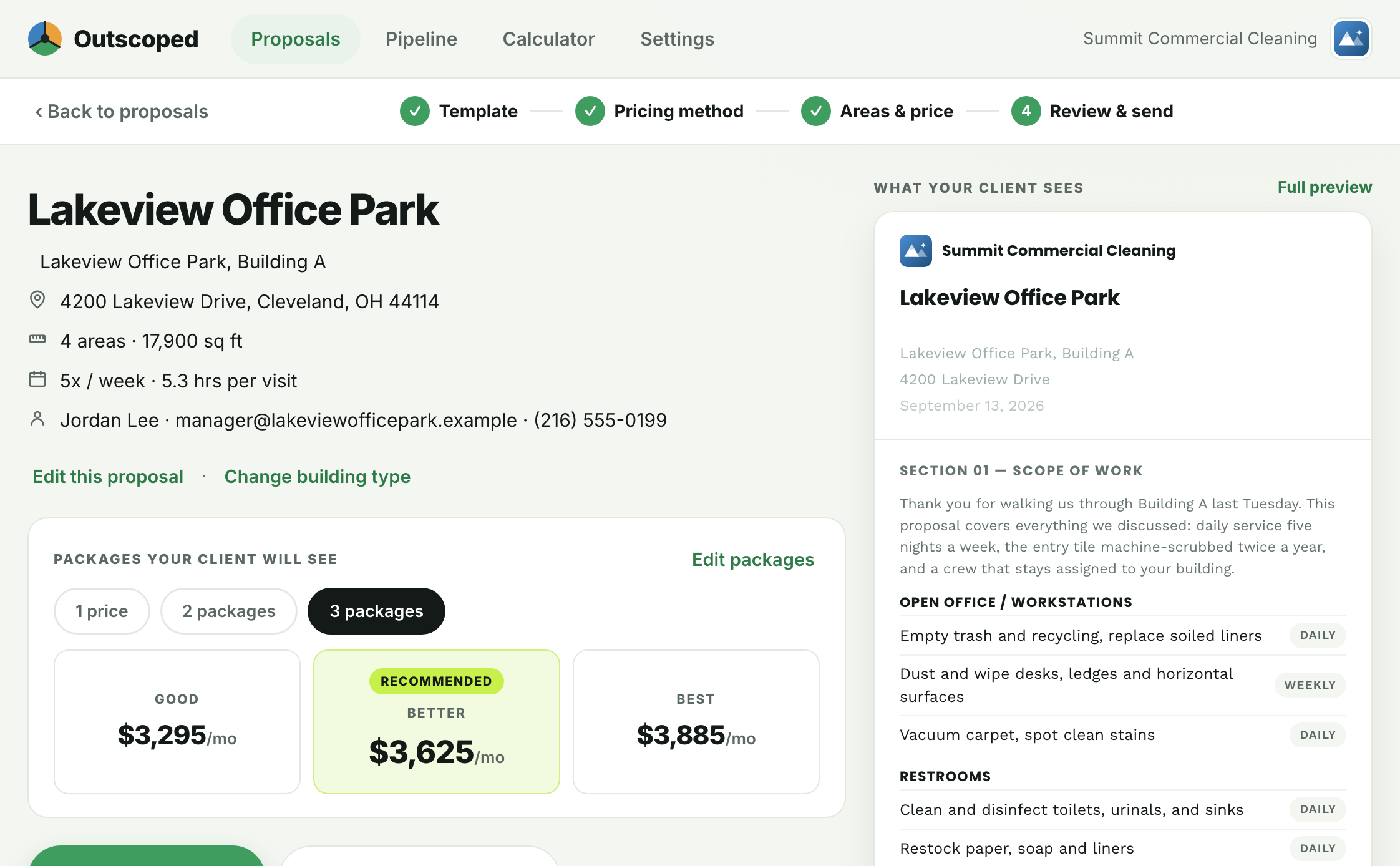
Walk the building and record square footage per area: open office, restrooms, lobby, breakroom, and so on. Areas clean at very different speeds, so one blended number hides the truth. A 900 square foot restroom takes far longer than 900 square feet of open office.
While you walk, note visits per week the client wants, floor types, and anything unusual (high security, after-hours access, special disinfection).
DataForSEO confirmed this page has a narrower but very commercial query: how to bid commercial cleaning jobs. Search volume is lower than broad template terms, but the CPC is high because the person searching is close to quoting real work. That makes the page useful for Outscoped even if it does not become the largest traffic page. It answers the operational question first, then routes the reader into the calculator and proposal flow.
The buyer behind this search is usually not looking for theory. They need to know how to avoid underbidding, how to calculate labor hours, what production rates mean, what margin to use, and how to turn the number into a proposal that does not look improvised. The goal here is not to promise a magic rate. The goal is to give the contractor a repeatable bidding process that can be checked before the quote goes out.
2. Apply production rates to get labor hours
A production rate is how many square feet one cleaner covers in an hour for a given area type. Divide area square footage by its rate to get hours per visit.
Typical starting ranges by area type (tune them to your crew and building):
| Area type | Production rate |
|---|---|
| Open office / workstations | 3,500 to 4,500 sq ft/hr |
| Restrooms | 600 to 900 sq ft/hr |
| Lobby / common areas | 4,000 to 5,000 sq ft/hr |
| Hallways / corridors | 5,000 to 7,000 sq ft/hr |
| Breakroom / kitchenette | 1,800 to 2,200 sq ft/hr |
Lower service frequency means heavier soil per visit. If a building is cleaned twice a week instead of five times, each visit takes longer per square foot. Adjust the rate down or apply a soil factor.
3. Convert to monthly hours
4. Price from true cost, not from the wage
The wage is not the cost. Burden (payroll taxes, insurance, workers comp), supplies, and overhead all ride on top of every labor hour.
Then apply your target margin to get the price. If you bid below true cost you are paying to clean the building.
5. Present three prices, not one
A single number invites a yes/no decision. Three packages (a core scope, a recommended middle, and a premium tier with periodic services baked in) turn the conversation from "how cheap" into "which one." Put the recommended package in the middle and make it visibly the default choice.
Common bidding mistakes that kill margin
The most expensive mistake is using a competitor's price as the starting point. If their crew, wage, supply plan, overhead, and scope are different, their number tells you almost nothing. A commercial cleaning bid has to come from your production rates and your true cost. Competitor pricing can tell you whether the market will push back, but it should not replace the math.
The second mistake is mixing one-time work into the recurring monthly price without naming it. Floor stripping and waxing, carpet extraction, high dusting, window cleaning, and post-construction cleanup do not behave like nightly janitorial work. Put them in optional services or a premium package so the client understands why one plan costs more.
The third mistake is sending a number without a scope. A client cannot judge whether $2,800 per month is expensive or cheap until they see the exact areas, tasks, and frequencies. The scope protects both sides. It helps the buyer compare proposals fairly, and it helps the contractor defend the price when someone asks for "just a little less."
What to do when the calculated price feels high
If the calculator produces a number that feels high, do not immediately cut margin. Check the inputs first. Confirm square footage, frequency, restroom counts, production rates, wage burden, and supplies. A bad square footage estimate or a too-low production rate can move the monthly number dramatically. If the inputs are correct, the high price may be the truth of the job.
That is where package pricing helps. Keep a core plan that covers the required recurring janitorial scope, a recommended plan that adds quality checks or periodic detail work, and a premium plan that includes more floor care or specialty service. The client can choose a level of service instead of forcing every conversation into discounting.
How Outscoped turns the bid into a proposal
After the labor hours and package prices are set, the work is not finished. The number has to become a clean proposal the client can approve. Outscoped carries the same data into a commercial cleaning proposal template: areas, frequencies, package pricing, optional services, and service agreement language. Then the client opens a link, reviews the package choices, and signs on the same page.
This matters because speed is part of the sales process. A contractor who sends a complete proposal the same day looks more prepared than a contractor who waits a week to attach a spreadsheet. The math builds confidence internally; the proposal builds confidence with the buyer.
Common questions
How do you calculate a commercial cleaning bid? Measure each area, divide square footage by production rate to get hours per visit, multiply by visits per week and weeks per month, then price those hours using wage, burden, supplies, overhead, and margin.
What production rate should I use? It depends on area type and building condition. Open office may clean at several thousand square feet per hour, while restrooms are much slower. Start with conservative rates, then adjust them using your actual crew data.
Should I bid commercial cleaning by square foot or by labor hour? Use square footage to estimate labor hours, but price from labor hours and true cost. A flat square foot price can hide restroom load, service frequency, security requirements, and specialty work.
6. Send it the same day
The walkthrough is the moment of maximum trust. A written, signable proposal that arrives the same day usually beats a cheaper one that arrives next week. Send a link the client can open on a phone, pick a package, and sign in one step.